
Getting enough sleep is important, but getting quality sleep is what truly helps your body and mind function at their best. Many people spend seven to eight hours in bed yet still wake up feeling tired, unfocused, or low on energy. Poor sleep can affect physical health, mental well-being, mood, productivity, and even long-term health outcomes.
Common sleep problems such as difficulty falling asleep, frequent nighttime awakenings, stress-related sleep disturbances, and restless sleep have become increasingly common in today’s fast-paced world. The good news is that there are natural ways to improve your sleep habits and enjoy more restful nights.
In this guide, you’ll learn how to improve sleep quality naturally through practical lifestyle changes, healthy bedtime routines, and proven sleep-friendly habits that can help you wake up feeling refreshed and energized.
Table of Contents
What Does Good Sleep Quality Mean?
Good sleep quality is about more than just getting enough hours of sleep. It refers to how well you sleep and how rested you feel when you wake up. Even if you spend eight hours in bed, poor-quality sleep can still leave you feeling tired and unfocused. High-quality sleep allows your body and mind to recover properly, helping you stay productive, energetic, and healthy throughout the day.
Signs of Healthy Sleep
You are likely getting healthy, restorative sleep if you:
- Fall asleep within 15–20 minutes of going to bed
- Sleep through most of the night without frequent interruptions
- Wake up feeling refreshed and ready for the day
- Maintain steady energy levels and alertness throughout the day
Signs of Poor Sleep Quality
Poor sleep quality often shows up through symptoms such as:
- Frequent waking during the night
- Difficulty falling asleep even when tired
- Feeling fatigued or sleepy during the day
- Poor concentration, irritability, and mood swings
Good Sleep vs Poor Sleep
| Good Sleep Quality | Poor Sleep Quality |
|---|---|
| Wake refreshed | Wake tired |
| Consistent sleep schedule | Irregular sleep pattern |
| Few nighttime interruptions | Frequent waking |
| Good daytime focus | Brain fog and fatigue |
Understanding these signs can help you identify whether your sleep habits are supporting your health or if changes are needed to improve your overall sleep quality.
Common Causes of Poor Sleep
Many people struggle with sleep without realizing that everyday habits and environmental factors may be the root cause. Understanding these common causes can help you take the right steps toward better rest and improve sleep quality naturally.
Lifestyle Factors
Modern lifestyles often interfere with healthy sleep patterns. Excessive screen time before bed is one of the biggest contributors to poor sleep. The blue light from smartphones, tablets, and computers can suppress melatonin production, making it harder to fall asleep.
Irregular sleep schedules can also disrupt your body’s internal clock. Going to bed and waking up at different times each day confuses your natural sleep-wake cycle. In addition, a lack of regular physical activity may reduce sleep quality, as exercise helps the body relax and promotes deeper sleep.
Diet and Stimulants
What you eat and drink can significantly affect your sleep. Consuming caffeine late in the day may keep you alert for hours, making it difficult to fall asleep. Heavy meals before bedtime can cause discomfort, indigestion, and disrupted sleep. While alcohol may initially make you feel sleepy, it often interferes with deep sleep and can lead to frequent awakenings during the night.
Stress and Environmental Factors
Mental and environmental factors play a major role in sleep quality. Anxiety, stress, and overthinking can keep your mind active long after bedtime. External disturbances such as noise, light, or an uncomfortable room temperature can also prevent restful sleep. A cluttered or poorly designed bedroom environment may further reduce your ability to relax and sleep well.
Most Common Sleep Disruptors:
- Smartphones before bed
- Work-related stress
- Inconsistent bedtime
- Excessive caffeine intake
- Poor sleep environment
7 Natural Ways to Improve Sleep Quality
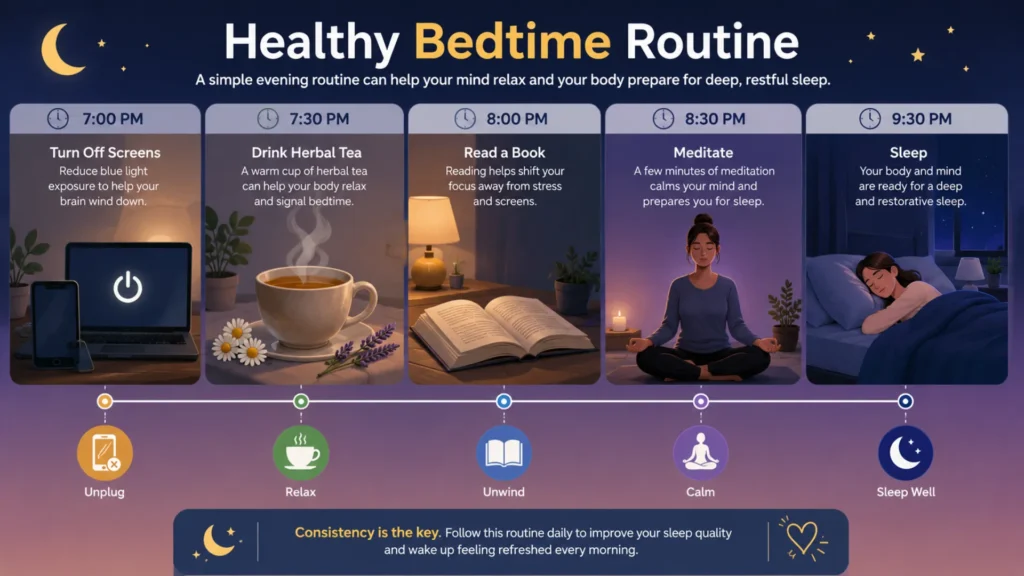
If you’re looking for practical ways to improve sleep quality naturally, small daily habits can make a significant difference. The following strategies help support your body’s natural sleep cycle and promote deeper, more restorative rest.
1. Maintain a Consistent Sleep Schedule
One of the most effective sleep habits is going to bed and waking up at the same time every day, including weekends. A consistent schedule helps regulate your body’s internal clock, also known as the circadian rhythm. When your body knows when it’s time to sleep and wake up, falling asleep becomes easier and sleep quality often improves naturally.
2. Reduce Screen Time Before Bed
Phones, tablets, laptops, and televisions emit blue light, which can interfere with the production of melatonin—the hormone responsible for sleep. Try to avoid screens for at least one hour before bedtime. Instead, choose relaxing activities that help your mind unwind and prepare for sleep.
3. Create a Relaxing Bedtime Routine
A calming bedtime routine signals to your body that it’s time to rest. Simple activities can help reduce stress and improve relaxation before sleep, such as:
- Reading a book
- Practicing meditation
- Doing deep breathing exercises
- Listening to calming music
Even spending 10 to 15 minutes on these activities can make a noticeable difference.
4. Optimize Your Sleep Environment
Your bedroom should support quality sleep. A comfortable and peaceful environment helps you fall asleep faster and stay asleep longer.
Consider these adjustments:
- Keep the room cool and comfortable
- Use blackout curtains to block outside light
- Reduce noise with earplugs or a white noise machine
- Invest in a supportive mattress and pillow
5. Exercise Regularly
Regular physical activity can help you fall asleep more quickly and experience deeper sleep. Activities such as walking, jogging, cycling, or yoga are excellent choices. For best results, try to exercise earlier in the day or at least a few hours before bedtime, as intense late-night workouts may make it harder to relax.
6. Watch What You Eat and Drink
Your evening food and drink choices can affect sleep quality. Avoid caffeine in the afternoon and evening since it can stay in your system for several hours. It’s also helpful to limit heavy, spicy, or large meals close to bedtime, as they may cause discomfort and disrupt sleep.
7. Get Natural Sunlight Exposure
Morning sunlight plays an important role in regulating your circadian rhythm. Spending time outdoors shortly after waking helps your body recognize the difference between day and night. This natural exposure can improve sleep timing, boost alertness during the day, and support better sleep at night.
Quick Checklist Box
✔ Sleep and wake at the same time
✔ Keep bedroom dark and cool
✔ Avoid screens before bed
✔ Exercise regularly
✔ Limit caffeine after noon
✔ Practice relaxation techniques
Best Foods and Drinks That Support Better Sleep
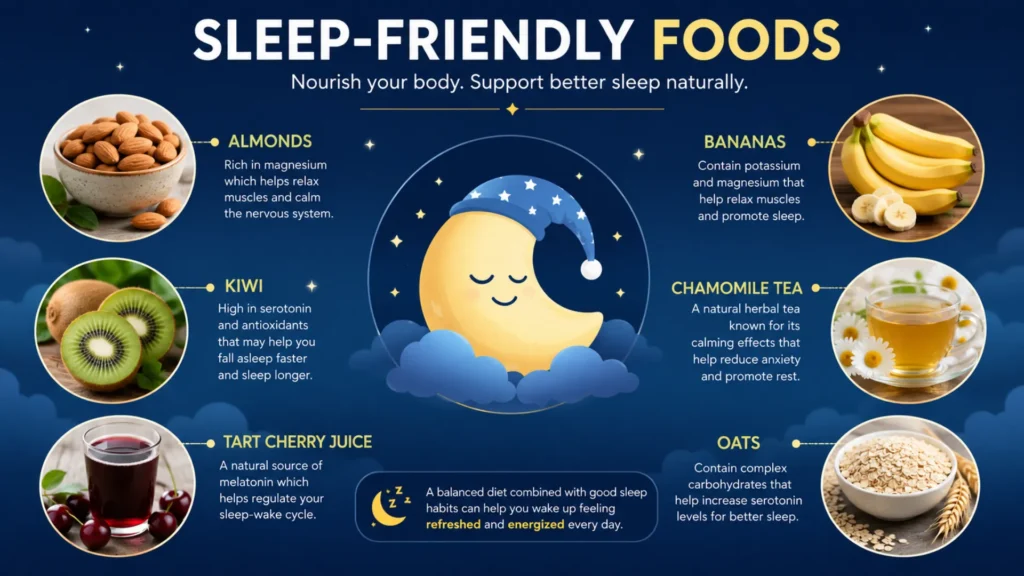
What you eat and drink in the evening can have a noticeable impact on your sleep quality. Certain foods contain nutrients that help the body relax and support the natural sleep cycle. Including these options in your diet may make it easier to fall asleep and stay asleep through the night.
Sleep-Friendly Foods
| Food/Drink | Potential Benefit |
|---|---|
| Almonds | Rich in magnesium |
| Bananas | Muscle relaxation support |
| Kiwi | May support sleep onset |
| Chamomile Tea | Relaxation effects |
| Tart Cherry Juice | Natural melatonin source |
Tips
- Choose light evening snacks instead of heavy meals close to bedtime.
- Stay hydrated throughout the day, but avoid drinking excessive fluids right before bed.
- Avoid sugary foods and desserts in the evening, as they may cause energy spikes and disrupt sleep.
Making small dietary changes like these can be a simple and natural way to support better sleep and improve overall well-being.
Pros and Cons of Natural Sleep Improvement Methods
Natural sleep improvement methods can be highly effective, but they also come with a few limitations. Understanding both sides can help you set realistic expectations and stay committed to better sleep habits.
Pros
- No risk of medication dependency or unwanted side effects.
- Supports overall physical and mental health, not just sleep.
- Encourages long-term, sustainable sleep improvements.
- Usually cost-effective and easy to incorporate into daily life.
Cons
- Results may take days or weeks to become noticeable.
- Requires consistency and patience to be effective.
- Lifestyle changes can be challenging to maintain at first.
- Severe sleep disorders may require professional medical evaluation and treatment.
For most people, natural strategies provide a safe and sustainable path to better sleep quality when practiced consistently over time.
When Should You See a Doctor?
While natural sleep improvement methods can be very effective, some sleep problems require professional medical attention. If your sleep issues continue despite making healthy lifestyle changes, it may be time to consult a doctor.
Warning Signs
Seek medical advice if you experience:
- Insomnia lasting several weeks without improvement
- Loud snoring or breathing interruptions during sleep, which may indicate sleep apnea
- Extreme daytime sleepiness that affects your ability to stay alert
- Sleep problems that interfere with daily life, work performance, relationships, or overall well-being
Important Note
Natural methods help many people improve their sleep quality, but persistent sleep issues can sometimes be a sign of an underlying health condition. A healthcare professional can identify the root cause and recommend the most appropriate treatment to help you achieve better, healthier sleep.
Conclusion
Improving sleep quality naturally doesn’t require drastic changes. In most cases, the quality of your sleep is heavily influenced by the habits and routines you follow throughout the day. Small lifestyle adjustments—such as maintaining a consistent sleep schedule, reducing screen time before bed, staying active, and creating a relaxing sleep environment—can lead to noticeable improvements over time.
Rather than looking for quick fixes, focus on building sustainable habits and staying consistent. Start with one or two changes that feel manageable, then gradually add more healthy practices. With patience and consistency, you can create a sleep routine that supports better rest, improved energy, and overall well-being.