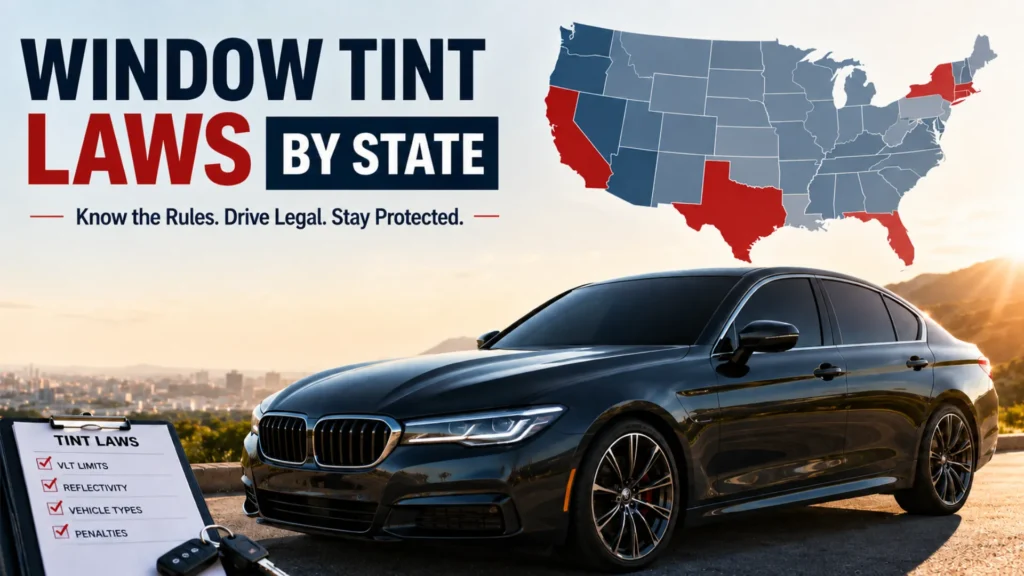
Thinking about tinting your car windows? Before you do, it’s important to understand the rules in your area. Window tint laws decide how dark or reflective your vehicle’s windows can legally be, and these rules are different across the United States. That’s why checking window tint laws by state is so important for every driver.
Many people install dark tint for privacy, style, or heat protection without realizing they could be breaking local laws. Illegal tinting can lead to traffic fines, failed vehicle inspections, or even police stops during routine driving. A tint that is legal in one state may not be allowed in another. Knowing the basics before tinting your car can save you time, money, and unnecessary trouble later.
Table of Contents
What Do Window Tint Percentages Mean?
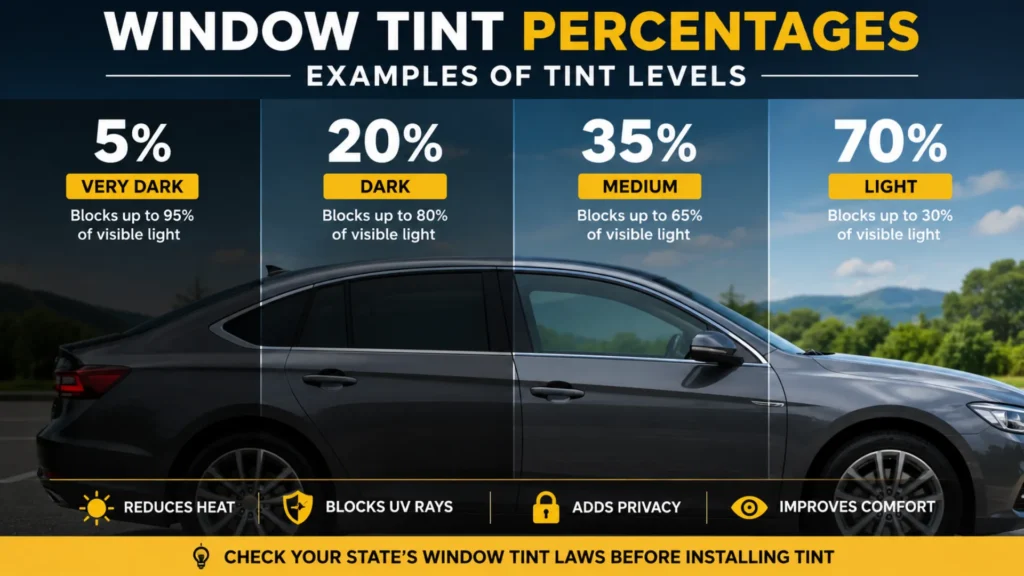
Window tint percentages refer to how much light can pass through your car windows. This is called VLT (Visible Light Transmission). A lower percentage means the tint is darker, while a higher percentage means more light can enter the vehicle.
For example, a 5% tint blocks almost all visible light and looks extremely dark. On the other hand, a 70% tint allows most light through and appears much lighter. Understanding these numbers is important because window tint laws by state are based on VLT percentages.
Understanding VLT in Simple Words
- 5% tint – Very dark and commonly used for limousines
- 20% tint – Dark tint often seen on SUVs and trucks
- 35% tint – Moderate tint and commonly legal in many states
- 70% tint – Very light tint similar to factory-installed tint
| Tint Percentage | Visibility Level | Common Usage |
|---|---|---|
| 5% | Very dark | Limousines |
| 20% | Dark | SUVs/trucks |
| 35% | Moderate | Common legal tint |
| 70% | Very light | Factory tint |
Why Window Tint Laws Differ Across US States
Window tint laws are not the same across the United States because every state has different safety concerns, driving conditions, and climate needs. States create their own rules to balance driver comfort with road safety. Police officers also need to clearly see inside vehicles during traffic stops, which is why visibility plays a big role in tint regulations.
Weather is another major factor. Hot and sunny states often allow darker tint to reduce heat and block strong sunlight, while colder northern states may enforce stricter limits for better visibility during snow, rain, or fog.
Key Reasons Tint Laws Vary by State:
- Hot states often allow darker window tint
- Northern states may have stricter tint rules
- Visibility matters for law enforcement and road safety
- Different driving conditions affect state regulations
Why Window Tint Laws Differ Across US States
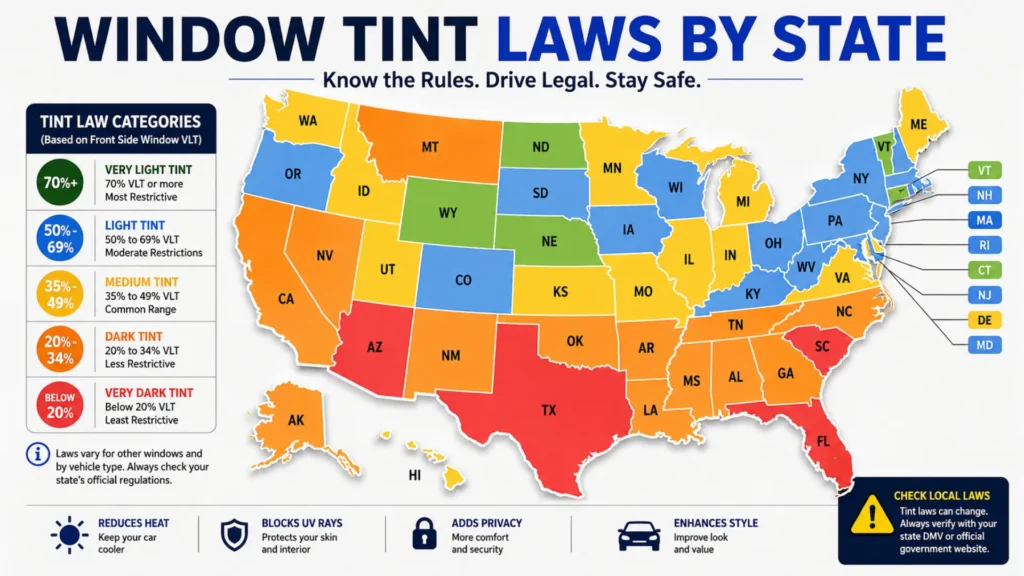
Window tint laws are different across the United States because each state has its own weather conditions, road safety concerns, and driving environments. Lawmakers try to create rules that keep drivers comfortable while also making sure vehicles remain safe on the road. This is why window tint laws by state can vary quite a bit.
One of the biggest reasons for these differences is visibility. Police officers need to see inside a vehicle during traffic stops for safety reasons. If a tint is too dark, it becomes harder to identify drivers or passengers, especially at night. States with stricter safety regulations usually limit how dark window tint can be.
Climate also plays a major role in tint regulations. Hot and sunny states such as Arizona, Texas, and Florida often allow darker window tint because it helps reduce heat and blocks strong sunlight. In colder northern states, lighter tint is more common because drivers may deal with snow, rain, fog, and lower visibility throughout the year.
Key Reasons Tint Laws Vary by State:
- Hot states often allow darker window tint to reduce heat and UV exposure
- Northern states may have stricter tint rules for better visibility in poor weather
- Visibility matters for law enforcement during traffic stops
- Different road and weather conditions affect state tint regulations
SUV vs Sedan Tint Laws Explained
Window tint laws can also vary depending on the type of vehicle you drive. In many states, SUVs and trucks are allowed to have darker rear window tint compared to sedans. This is mainly because larger vehicles are often treated differently under state tint regulations.
Sedans usually have stricter rules for passenger windows and rear windshields. States often require higher visibility for standard passenger cars to improve road safety and help law enforcement officers see inside the vehicle more easily during traffic stops.
Many drivers get confused because factory tint on SUVs may look much darker than what is legally allowed on sedans. Before tinting your vehicle, it’s important to check your local window tint laws by state to avoid fines or inspection problems.
Common Driver Confusion
- Rear windshield tint rules may differ by vehicle type
- Factory tint is not always the same as aftermarket tint
- SUVs and commercial vehicles may follow different tint regulations
Penalties for Illegal Window Tint
Ignoring window tint laws can lead to several problems for drivers. Since window tint laws by state are different, using tint that is too dark in your area may result in legal penalties during a traffic stop or vehicle inspection. In some states, repeated violations can become expensive and time-consuming.
Common penalties for illegal window tint include:
- Traffic tickets issued by police officers
- Fines that vary depending on the state
- Vehicle inspection failure until the tint is removed
- Forced tint removal to meet legal requirements
Drivers should always check local tint regulations before installing new film to avoid unnecessary trouble and extra costs.
Can Police Pull You Over for Window Tint?
Yes, police officers can pull you over if your window tint appears darker than the legal limit. During the stop, officers may measure the tint percentage to see if it follows state law. If the tint is illegal, you may receive a warning, ticket, or order to remove the tint.
Tips Before Tinting Your Vehicle
Before getting your car windows tinted, it’s important to understand your state’s current tint regulations. Window tint laws by state can change over time, so always double-check the latest legal limits before choosing a tint percentage. This can help you avoid fines, failed inspections, or having to remove the tint later.
It’s also a smart idea to work with certified and experienced tint installers. Professional shops usually understand local laws and can recommend legal options for your vehicle. Always ask for legal tint documentation or certification after installation, especially if your state requires proof during inspections.
If you are unsure about the legal limit, avoid choosing extremely dark tint. A slightly lighter tint is often safer and more practical for daily driving.
Questions to Ask a Tint Shop
- Is this tint legal in my state?
- Will I receive certification or legal documentation?
- Does this tint include warranty coverage?
Pros and Cons of Window Tinting
Window tinting offers several benefits, but it also comes with a few drawbacks drivers should know before making a decision. Understanding both sides can help you choose the right tint while staying within your state’s legal limits.
Pros
- Reduces heat inside the vehicle, especially during hot summer days
- Adds privacy by making it harder for others to see inside the car
- Blocks harmful UV rays that can damage skin and fade interiors
- Improves the overall appearance of the vehicle with a cleaner look
Cons
- Legal restrictions vary depending on window tint laws by state
- Dark tint can reduce visibility while driving at night
- Illegal tint may lead to tickets, fines, or warnings
- Some vehicles may fail inspections if the tint does not meet state regulations
Frequently Asked Questions
What is the darkest legal tint?
The darkest legal tint depends on the state you live in. Some states allow darker tint on rear windows, while front side windows usually have stricter limits. Always check your local window tint laws by state before installing very dark tint.
Is 5% tint legal anywhere?
Yes, a few states allow 5% tint on rear windows or certain vehicle types like SUVs and limousines. However, 5% tint is extremely dark and is illegal for front side windows in many states. Laws can also differ for passenger cars and commercial vehicles.
Can you get pulled over for dark tint?
Yes, police officers can pull you over if your window tint appears darker than the legal limit. In many states, illegal tint is considered a traffic violation and may result in fines or inspection issues.
Do tint laws apply to factory tint?
Yes, factory tint must still follow state regulations. Many factory-installed tints are already legal, but adding aftermarket tint on top can make the windows too dark and illegal.
Which states allow the darkest tint?
States with hotter climates, such as Arizona, Texas, and Florida, often allow darker tint on rear windows. However, front window rules are still regulated, so drivers should always review current state laws before tinting their vehicles.
Conclusion
Understanding window tint laws can help you avoid unnecessary fines, failed inspections, and safety issues. Since window tint laws by state can change over time, it is always smart to check your local DMV or official state guidelines before tinting your car.
Choosing the right tint is not only about appearance but also about staying safe and following the law. Stay informed, stay legal, and choose window tint that works best for your vehicle and local regulations.