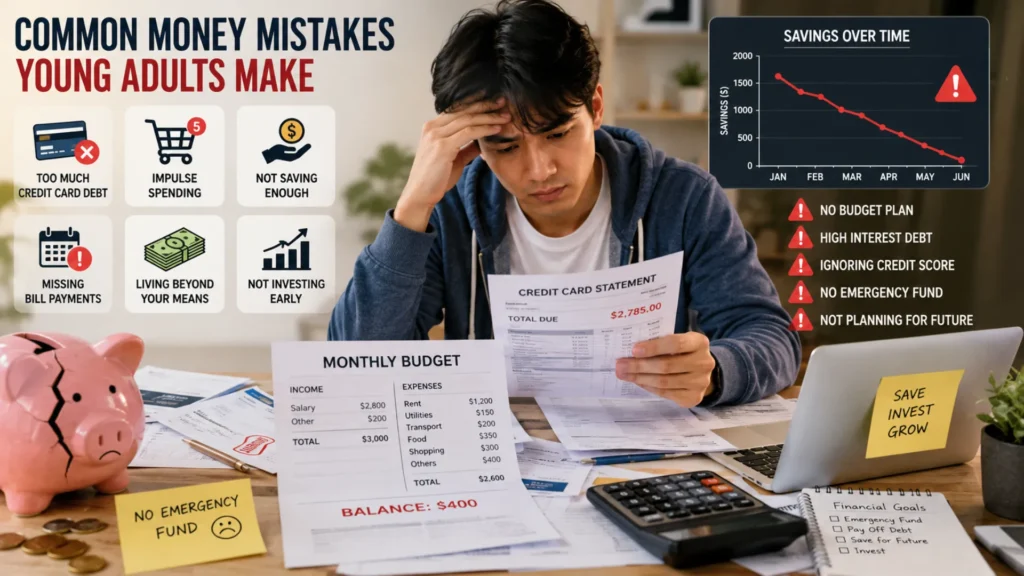
The financial habits you build in your late teens, 20s, and early 30s can have a lasting impact on your future. Small decisions, such as how you spend, save, or manage debt, may not seem important today, but they can shape your financial situation for years to come. Unfortunately, many young adults make money mistakes that lead to unnecessary debt, financial stress, and missed opportunities to grow their wealth.
The good news is that most of these mistakes are avoidable once you know what to look for. Understanding the most common money mistakes young adults make is the first step toward building a stronger financial foundation. In this article, you’ll learn about these costly errors and discover practical ways to avoid them so you can make smarter financial decisions with confidence.
Table of Contents
Why Financial Decisions Matter in Your 20s and Early 30s

The Long-Term Impact of Small Financial Choices
The financial decisions you make in your 20s and early 30s can have a lasting effect on your future. Small daily choices, such as buying unnecessary items, overspending on entertainment, or ignoring savings, may not seem significant at first. However, these habits can add up over time and make it harder to achieve important financial goals.
On the other hand, building strong money habits early can put you on a path toward greater financial stability. Creating a budget, saving regularly, and avoiding unnecessary debt can help you manage your money more effectively. Even small positive actions taken consistently can lead to significant results over the years.
Key Takeaways
- Financial habits compound over time, whether they are good or bad.
- Early money mistakes can become costly and difficult to fix later.
- Smart financial decisions today can create more opportunities in the future.
- Consistent saving and responsible spending help build long-term financial security.
Common Money Mistakes Young Adults Make
Many young adults start earning money for the first time without receiving much financial education. As a result, they often make mistakes that can affect their finances for years. Understanding these common money mistakes young adults make can help you avoid unnecessary stress, debt, and missed opportunities to build wealth.
1. Not Following a Budget
One of the biggest financial mistakes is not having a budget. A budget helps you understand where your money is going and ensures that your spending aligns with your financial goals.
Many people avoid budgeting because they think it is restrictive, time-consuming, or too complicated. In reality, budgeting gives you more control over your money rather than limiting your freedom.
Beginners can start with simple methods like the 50/30/20 rule, where 50% of income goes toward needs, 30% toward wants, and 20% toward savings and debt repayment.
2. Living Beyond Their Means
Living beyond your means happens when your expenses consistently exceed your income. This often occurs because of lifestyle inflation, where spending increases as earnings grow.
For example, getting a salary raise may lead to upgrading your car, buying expensive gadgets, or dining out more often. While occasional treats are fine, regularly increasing expenses can make it difficult to save money.
Common warning signs include relying on credit cards for everyday expenses, having little money left at the end of the month, and struggling to save consistently.
3. Ignoring Emergency Savings
Unexpected expenses can happen at any time. Medical bills, car repairs, or job loss can create financial challenges if you are unprepared.
An emergency fund acts as a financial safety net and prevents you from relying on loans or credit cards during difficult times. Financial experts generally recommend saving three to six months’ worth of essential living expenses.
Even if you start small, building an emergency fund gradually can provide peace of mind and financial stability.
4. Relying Too Much on Credit Cards
Credit cards can be useful when managed responsibly, but overusing them can quickly lead to high-interest debt.
Carrying balances month after month means paying interest on top of your purchases, making items much more expensive than they originally were. This can create a cycle of debt that becomes difficult to escape.
Good credit card habits include paying the full balance whenever possible, keeping spending under control, and avoiding unnecessary purchases.
5. Missing Bill Payments
Missing payments may seem like a minor mistake, but it can have serious financial consequences. Late payments can lead to fees, higher interest charges, and damage to your credit score.
Fortunately, this mistake is easy to avoid. Setting payment reminders or using automatic bill payments can help ensure bills are paid on time. Consistent payments also build a positive financial track record.
6. Delaying Investing
Many young adults believe they need a large amount of money before they can start investing. As a result, they postpone investing for years.
The biggest cost of waiting is losing the benefits of compound growth, where your earnings generate additional earnings over time. Even small investments made early can grow significantly over the long term.
Starting early gives your money more time to work for you and can make reaching future financial goals much easier.
7. Taking on Unnecessary Debt
Not all debt is bad, but borrowing money for non-essential purchases can create financial pressure.
Personal loans for discretionary spending and impulse financing decisions often lead to repayment challenges. Buy Now, Pay Later services may seem convenient, but multiple small payments can add up quickly and become difficult to manage.
Before taking on new debt, consider whether the purchase is truly necessary and whether you can comfortably afford the repayments.
8. Ignoring Credit Scores
Your credit score plays an important role in your financial life. Lenders often use it when deciding whether to approve loans, credit cards, or other forms of financing.
A poor credit score can result in higher borrowing costs and fewer financial opportunities. Fortunately, improving your score is usually straightforward. Paying bills on time, keeping credit card balances low, and regularly reviewing your credit report can make a significant difference over time.
By avoiding these common money mistakes, young adults can build stronger financial habits and create a more secure future.
Money Mistakes vs Smart Financial Habits
Understanding the difference between common money mistakes and smart financial habits can help you make better financial decisions. The table below provides a quick comparison of mistakes many young adults make and the healthier alternatives that can improve long-term financial stability.
| Common Mistake | Possible Consequence | Better Alternative |
|---|---|---|
| No Budget | Overspending | Monthly Budget Plan |
| No Emergency Fund | Financial Stress | Save 3–6 Months of Expenses |
| Credit Card Misuse | High-Interest Debt | Pay Balance in Full |
| Delayed Investing | Lost Growth Potential | Start Investing Early |
| Missed Payments | Lower Credit Score | Automate Bills |
Many of these mistakes may seem small at first, but they can have a significant impact over time. Creating a budget, building an emergency fund, using credit responsibly, investing early, and paying bills on time are simple habits that can strengthen your financial future. By replacing poor money habits with smarter choices, you can avoid unnecessary stress and work toward greater financial security.
Pros and Cons of Learning Financial Management Early

Learning financial management at a young age can create a strong foundation for long-term financial success. It helps you make smarter decisions with your money and avoid many common money mistakes young adults make. However, like any skill, it comes with both benefits and challenges.
Pros
- Better control over money and spending habits.
- Reduced risk of falling into unnecessary debt.
- Improved financial security through saving and planning.
- Greater investment growth potential by starting early.
- Less financial stress and more confidence in money decisions.
Cons
- Requires discipline and consistency to maintain good habits.
- May involve short-term lifestyle adjustments and reduced spending.
- Financial concepts and investment terms can feel overwhelming at first.
Despite these challenges, learning financial management early can provide lifelong benefits that far outweigh the initial effort.
Practical Tips to Avoid These Money Mistakes
Create a Monthly Budget
A monthly budget helps you understand where your money is going. Start by tracking your income and all expenses, including small daily purchases. This makes it easier to spot unnecessary spending and stay within your limits. If managing everything manually feels difficult, consider using a budgeting app to organize and monitor your finances.
Build an Emergency Fund
Unexpected expenses can happen at any time, so having an emergency fund is essential. Begin with small savings goals and gradually increase them over time. Setting up automatic transfers to a savings account can help you save consistently without thinking about it.
Invest Early and Consistently
One of the best ways to build wealth is to start investing as early as possible. Focus on long-term growth instead of trying to make quick profits. Even small, affordable investments made regularly can grow significantly over time.
Monitor Your Credit
Your credit history plays an important role in your financial future. Check your credit reports regularly for errors and make all payments on time. Consistent, responsible credit behavior can help improve your credit score over time.
Quick Action Checklist
- Create a budget today.
- Save a portion of every paycheck.
- Pay bills before their due dates.
- Avoid impulse purchases whenever possible.
- Review your financial goals every month.
Conclusion
Many of the most common money mistakes young adults make—such as not budgeting, overspending, relying too heavily on credit cards, ignoring emergency savings, and delaying investments—can have a lasting impact on financial health. The good news is that these mistakes are avoidable with a little planning and consistency.
By building better money habits today, you can improve your financial stability, reduce stress, and create a stronger foundation for future wealth. Start with small changes, whether it’s creating a budget, saving regularly, or paying bills on time. Remember, every smart financial decision you make today brings you one step closer to greater financial freedom tomorrow.