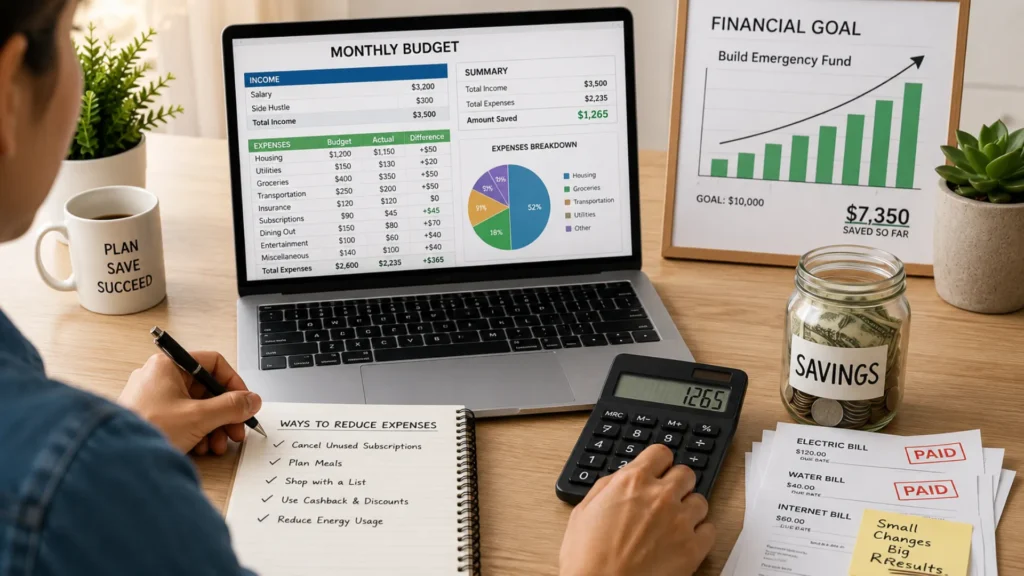
Many people find it difficult to keep up with rising monthly expenses. From higher grocery bills and utility costs to increasing transportation and housing expenses, everyday spending can quickly put pressure on a household budget. Even when income remains stable, small price increases across multiple areas can make it harder to save money or reach financial goals.
The good news is that reducing expenses does not always require major lifestyle changes. Small adjustments to daily spending habits can add up to significant savings over time. Identifying unnecessary costs and making smarter financial choices can have a lasting impact on your budget.
In this article, you’ll discover practical and effective ways to reduce monthly expenses, cut unnecessary spending, and build healthier financial habits that help you save more every month.
Table of Contents
Why Reducing Monthly Expenses Matters
Reducing your monthly expenses is one of the simplest ways to improve your financial health. Even small cuts in everyday spending can make a big difference over time. When you spend less, you free up money that can be used for more important financial priorities.
Benefits of Spending Less
Spending less each month can help you:
- Build an emergency fund to handle unexpected expenses without relying on credit cards.
- Pay off debt faster by putting extra money toward loans and outstanding balances.
- Reach financial goals sooner, whether it’s buying a home, starting a business, or saving for retirement.
- Reduce financial stress by having more confidence and stability in your finances.
Additional benefits include:
- More control over finances
- Increased monthly savings
- Better long-term financial security
By making smart spending decisions and focusing on essential expenses, you can create a stronger financial future while enjoying greater peace of mind.
Track Your Spending Before Cutting Costs
Before you start reducing expenses, it’s important to understand exactly where your money is going. Many people are surprised when they discover how much they spend on small, everyday purchases. Tracking your spending gives you a clear picture of your financial habits and helps you identify areas where you can save.
Review Your Monthly Expenses
Start by gathering records of all your spending from the past one to three months. Look at:
- Bank statements
- Credit card bills
- Digital payment history from apps and online wallets
Reviewing these records helps you spot recurring payments, unnecessary subscriptions, and spending patterns that may be draining your budget.
Categorize Your Spending
Once you’ve collected your expense data, group each expense into categories. Common categories include:
- Housing
- Utilities
- Transportation
- Food
- Entertainment
This step makes it easier to see which areas consume the largest portion of your income.
| Category | Examples |
|---|---|
| Housing | Rent, mortgage |
| Utilities | Electricity, water |
| Food | Groceries, dining out |
| Transportation | Fuel, public transit |
| Entertainment | Streaming services |
After categorizing your expenses, you’ll have a better understanding of where your money goes each month, making it much easier to identify realistic cost-cutting opportunities.
Cut Household and Utility Expenses

Reducing household and utility costs is one of the easiest ways to free up extra money each month. Small changes in daily habits can lead to noticeable savings over time without affecting your lifestyle.
Reduce Electricity Usage
Lowering electricity consumption starts with simple actions. Turn off lights, electronics, and appliances when they are not being used to avoid unnecessary energy waste. Replacing traditional bulbs with LED bulbs can also reduce energy use because they consume less power and last much longer. If you use heating or air conditioning, adjust thermostat settings by a few degrees to lower energy costs while keeping your home comfortable.
Lower Water Bills
Water expenses can add up quickly if leaks go unnoticed. Regularly check faucets, toilets, and pipes for leaks and repair them promptly. Installing water-saving fixtures, such as low-flow showerheads and faucets, can further reduce water usage without sacrificing performance.
Reduce Internet and Phone Costs
Review your current internet and mobile plans regularly. Compare providers to see if better deals are available. You can also contact your provider and negotiate for lower rates, discounts, or promotional offers.
Quick Savings Tips
- Unplug electronics when not in use
- Wash clothes in cold water
- Monitor energy consumption regularly
Reduce Food and Grocery Spending
Food expenses can take up a large part of your monthly budget, but a few simple habits can help you save significantly without sacrificing quality or nutrition.
Plan Meals in Advance
Creating a weekly meal plan helps you know exactly what ingredients you need before heading to the store. This reduces unnecessary purchases and makes grocery shopping more efficient. Always shop with a list and stick to it to avoid impulse buying, which can quickly increase your grocery bill.
Avoid Food Waste
Many households lose money by throwing away unused food. Make the most of leftovers by turning them into new meals for the next day. Proper food storage is also important, as it keeps ingredients fresh for longer and prevents spoilage.
Spend Less on Dining Out
Cooking at home more often is usually much cheaper than eating at restaurants or ordering takeout. Try limiting takeout orders to special occasions and preparing simple meals at home instead. Over time, these small changes can lead to substantial monthly savings.
| Strategy | Potential Benefit |
|---|---|
| Meal Planning | Fewer impulse purchases |
| Buying in Bulk | Lower cost per item |
| Store Brands | Reduced grocery bill |
| Coupons & Discounts | Additional savings |
Eliminate Unnecessary Subscriptions and Memberships
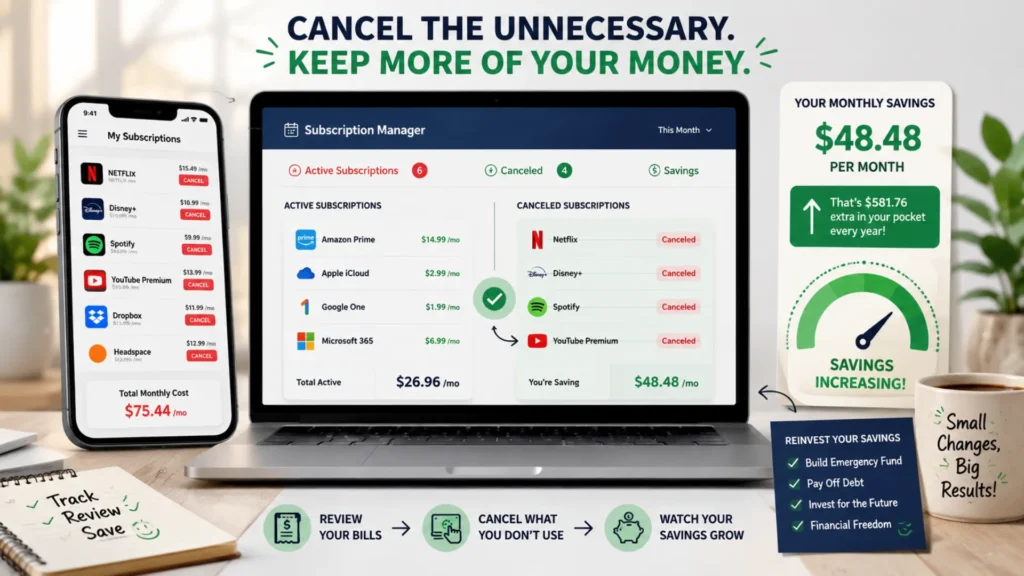
Monthly subscriptions can quietly drain your budget without you realizing it. Many people sign up for services and forget about them, which makes this one of the easiest areas to cut expenses and improve cash flow.
Identify Recurring Charges
Start by reviewing your bank and credit card statements for recurring payments. Look for:
- Streaming services you rarely watch
- Mobile apps and software subscriptions you no longer need
- Gym memberships that you seldom use
Even small monthly charges can add up to a significant amount over a year.
Decide What You Actually Use
Once you’ve identified your subscriptions, evaluate whether each one provides real value. If you haven’t used a service in the last few months, consider canceling it.
For subscriptions that you still need, check whether family or shared plans are available. Splitting costs with family members can help reduce expenses while maintaining access to the services you enjoy.
Quick Tips to Manage Subscriptions:
- Review all subscriptions at least once a month
- Set reminders before free trials renew
- Cancel inactive or rarely used memberships
- Use free alternatives whenever possible
- Share family plans when appropriate
Taking a few minutes each month to manage subscriptions can lead to noticeable savings and help you stay in control of your spending.
Lower Transportation Costs
Transportation can take up a large part of a monthly budget, but a few simple changes can help reduce expenses without major lifestyle adjustments.
Reduce Fuel Expenses
One of the easiest ways to cut transportation costs is to use less fuel. Try combining errands into a single trip instead of making multiple short drives throughout the week. Keeping your tires properly inflated can also improve fuel efficiency and reduce wear on your vehicle. In addition, driving smoothly by avoiding rapid acceleration and hard braking helps save fuel and lowers maintenance costs over time.
Explore Alternative Transportation
If possible, consider using public transportation for regular commutes. It is often much cheaper than driving daily. Carpooling with coworkers, friends, or family members can help split fuel and parking expenses. For shorter distances, walking or cycling eliminates fuel costs completely while providing health benefits.
| Option | Pros | Cons |
|---|---|---|
| Public Transit | Lower cost | Less flexibility |
| Carpooling | Shared expenses | Scheduling challenges |
| Cycling | No fuel cost | Weather limitations |
Shop Smarter and Avoid Impulse Spending
Follow the 24-Hour Rule
One of the easiest ways to control spending is to wait before making non-essential purchases. The 24-hour rule helps you avoid buying things on impulse. If you see something you want, wait at least a day before purchasing it. In many cases, you’ll realize you don’t actually need it.
Compare Prices Before Buying
Before spending money, take a few minutes to compare prices across different stores and websites. Price comparison tools can help you find the best deals quickly. Also, watch for seasonal sales, promotional offers, and discounts that can reduce your overall spending without sacrificing quality.
Create a Monthly Shopping Budget
Setting a monthly shopping budget helps you stay in control and prevents overspending.
Smart shopping habits to follow:
- Avoid emotional purchases made out of stress or excitement.
- Shop with a list to stay focused on what you truly need.
- Use cashback rewards wisely to save extra money on planned purchases.
These simple habits can make a noticeable difference in your monthly finances and help you build better spending habits over time.
Pros and Cons of Aggressively Cutting Expenses
Reducing spending can be an effective way to improve your finances, but it’s important to understand both the benefits and the challenges before making major changes.
Pros
- Faster savings growth: Spending less allows you to build your emergency fund and savings more quickly.
- More money for investments: Extra cash can be directed toward investments, helping you grow wealth over time.
- Better debt repayment opportunities: Lower expenses free up funds that can be used to pay off loans and credit card balances faster.
Cons
- Can feel restrictive: Cutting too many expenses at once may make you feel deprived.
- May reduce lifestyle enjoyment: Eliminating all discretionary spending can affect your overall quality of life.
- Difficult to maintain if unrealistic: Extreme budgeting often leads to frustration and may not be sustainable in the long run.
Key Takeaway
The best approach is to focus on sustainable expense reductions rather than extreme budgeting. Small, realistic changes are easier to maintain and can deliver significant financial benefits over time without making your daily life feel overly restricted.
Frequently Asked Questions
A common recommendation is to save at least 20% of your monthly income if possible. However, the right amount depends on your financial situation, goals, and expenses. Even starting with 5%–10% can make a difference. The key is to save consistently and increase the amount as your income grows.
Start by reducing non-essential spending such as dining out, subscription services you rarely use, impulse purchases, and entertainment costs. Reviewing your monthly statements can help you identify areas where small cuts can lead to significant savings over time.
Yes, budgeting is one of the most effective ways to reduce expenses. A budget helps you understand where your money goes, control unnecessary spending, and allocate more funds toward savings and financial goals. Even a simple monthly budget can improve your financial habits and help you stay on track
Conclusion
Reducing your monthly expenses does not require major lifestyle changes. In many cases, small adjustments such as creating a budget, cutting unnecessary subscriptions, lowering utility costs, planning meals, and shopping smarter can make a noticeable difference over time. The most effective ways to reduce monthly expenses are the ones you can consistently maintain.
Start with one or two manageable changes instead of trying to overhaul your finances all at once. Track your spending and monitor the savings you generate each month. As those savings grow, consider redirecting them toward important financial goals such as building an emergency fund, paying off debt, or investing for the future. Small steps taken consistently can lead to significant financial improvements over time.