
What you eat does much more than fill your stomach. Your daily diet directly affects your brain health, energy levels, mood, and ability to stay focused throughout the day. Many people experience problems like stress, low concentration, fatigue, and mood swings without realizing that poor eating habits may be one of the main reasons behind them.
Healthy nutrition gives your brain the nutrients it needs to function properly. A balanced diet can help improve mental clarity, reduce tiredness, and support emotional well-being. On the other hand, too much processed food and sugar can leave you feeling drained and unfocused.
Understanding how nutrition affects mental health and daily productivity can help you make smarter food choices and improve your overall quality of life naturally.
Table of Contents
The Connection Between Nutrition and Mental Health
Why the Brain Needs Proper Nutrition
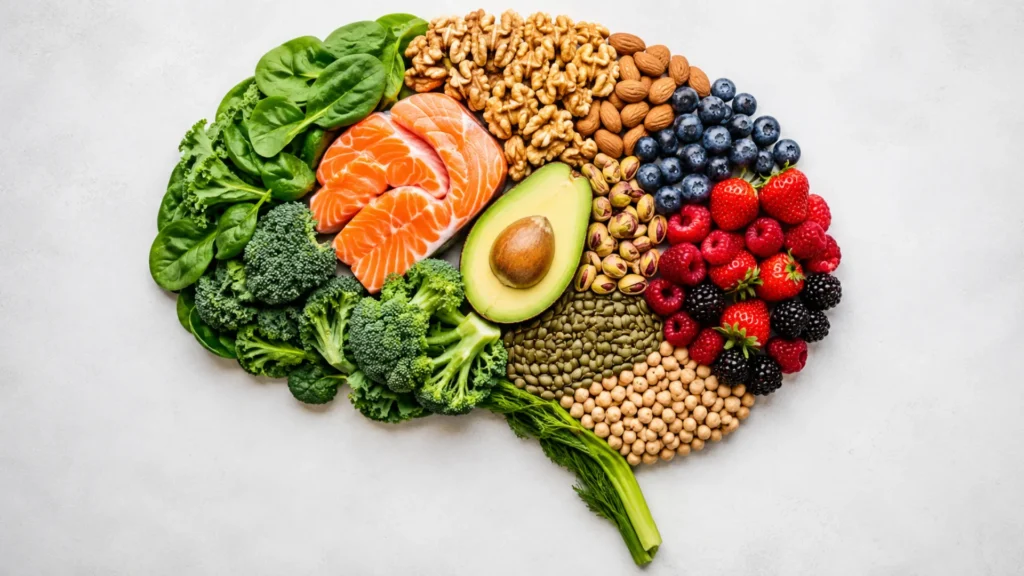
The brain needs the right nutrients to work properly every single day. Just like the body needs fuel for energy, the brain also depends on healthy foods to stay active and focused. Nutrients such as healthy fats, protein, vitamins, and minerals help support important brain functions like thinking, learning, and memory.
Food also helps the brain produce neurotransmitters, which are chemicals that control mood, emotions, and concentration. For example, serotonin is known as the “feel-good” chemical, and it is strongly linked to the foods we eat. When your diet lacks proper nutrition, you may feel tired, stressed, or mentally drained more often.
How Food Influences Mood and Focus
Healthy eating plays a major role in improving mental health and daily productivity. A balanced diet can help keep your mood stable, improve concentration, and support better memory. On the other hand, too much processed food and sugar can lead to energy crashes and poor focus.
Eating nutritious meals regularly may also help lower stress levels and improve emotional balance. Small food choices made every day can have a big impact on how you feel mentally and physically.
Benefits of healthy nutrition include:
- Better focus
- Stable energy
- Improved sleep
- Reduced stress
Best Nutrients for Brain Health and Productivity
Omega-3 Fatty Acids
Omega-3 fatty acids are one of the most important nutrients for brain health. They help improve memory, support learning, and may even reduce stress and mood swings. These healthy fats also support communication between brain cells, which helps you stay focused and mentally active throughout the day.
Some of the best food sources of omega-3 include fatty fish like salmon, along with walnuts and flaxseeds. Adding these foods to your daily diet can support both mental health and daily productivity naturally.
Protein and Healthy Carbohydrates
Protein gives your brain the amino acids it needs to stay alert and focused. Foods rich in protein can help improve concentration and keep your energy levels stable. Eggs, yogurt, beans, and lean meat are great options for daily meals.
Healthy carbohydrates are equally important because they provide steady energy to the brain. Whole grains, fruits, and oats help avoid sudden energy crashes and support better focus during work or study.
Vitamins, Minerals, and Hydration
Several vitamins and minerals also play a big role in mental wellness. Vitamin B helps support brain function and energy production, while magnesium may help reduce stress and improve sleep quality. Iron is important because low iron levels can cause tiredness and poor concentration.
Staying hydrated is just as important. Even mild dehydration can lead to fatigue, headaches, and low focus. Drinking enough water throughout the day helps your brain work more efficiently.
| Nutrient | Benefits for Mental Health | Food Sources |
|---|---|---|
| Omega-3 | Supports brain function | Salmon, walnuts |
| Magnesium | Reduces stress | Spinach, almonds |
| Protein | Improves focus | Eggs, yogurt |
| Water | Prevents fatigue | Water, fruits |
Best Nutrients for Brain Health and Productivity
Omega-3 Fatty Acids
Omega-3 fatty acids are one of the most important nutrients for brain health. These healthy fats help improve memory, support learning, and may even reduce stress and mood swings. They also help brain cells communicate more effectively, which can improve focus and mental performance throughout the day.
Many studies suggest that people who regularly consume omega-3-rich foods often experience better concentration and improved emotional balance. This is one reason why nutrition plays such an important role in mental wellness and daily productivity.
Some of the best food sources of omega-3 include fatty fish like salmon, sardines, and tuna. Plant-based options such as walnuts, chia seeds, and flaxseeds are also excellent choices. Adding these foods to your daily meals can naturally support better brain function and long-lasting energy levels.
Protein and Healthy Carbohydrates
Protein is another essential nutrient for maintaining focus and mental alertness. Your brain uses amino acids from protein to produce chemicals that help regulate mood, concentration, and energy. Eating enough protein during the day can help you stay productive and avoid mental fatigue.
Foods like eggs, yogurt, beans, lentils, chicken, and lean meat are great sources of high-quality protein. Including protein in breakfast or lunch can help you feel full longer while keeping your mind active and focused.
Healthy carbohydrates are equally important because they provide a steady source of energy to the brain. Unlike sugary snacks that cause sudden energy crashes, complex carbohydrates release energy slowly and help maintain stable concentration levels.
Whole grains, oats, brown rice, fruits, and vegetables are excellent examples of healthy carbohydrates. These foods can improve focus during work, study, or daily tasks while helping you feel more energized throughout the day.
Vitamins, Minerals, and Hydration
Several vitamins and minerals also play a major role in supporting mental health and productivity. Vitamin B helps with brain function and energy production, which is important for staying active and mentally sharp. Magnesium may help reduce stress levels and improve sleep quality, while iron supports oxygen flow in the body and helps prevent tiredness and poor concentration.
A lack of important nutrients can sometimes lead to low energy, mood changes, and difficulty focusing. This is why maintaining a balanced diet is so important for both physical and mental wellness.
Hydration is another key factor that many people ignore. Even mild dehydration can cause headaches, fatigue, brain fog, and reduced focus. Drinking enough water during the day helps your brain function properly and keeps your energy levels stable.
Simple habits like carrying a water bottle, eating water-rich fruits, and reducing sugary drinks can make a noticeable difference in how you feel and perform daily.
| Nutrient | Benefits for Mental Health | Food Sources |
|---|---|---|
| Omega-3 | Supports brain function | Salmon, walnuts |
| Magnesium | Reduces stress | Spinach, almonds |
| Protein | Improves focus | Eggs, yogurt |
| Water | Prevents fatigue | Water, fruits |
Foods That Improve Daily Productivity
Brain-Boosting Foods to Include in Your Diet
The foods you eat every day can have a big impact on your focus, energy, and overall productivity. Choosing healthy, nutrient-rich foods helps your brain stay active and keeps your energy levels stable throughout the day.
Fruits and vegetables are packed with vitamins, antioxidants, and fiber that support brain health and reduce tiredness. Nuts and seeds, such as almonds, walnuts, and chia seeds, provide healthy fats that help improve concentration and memory. Whole grains like oats, brown rice, and whole wheat bread release energy slowly, helping you stay productive for longer periods.
Eggs and fish are also excellent choices because they contain protein and omega-3 fatty acids that support brain function. Green tea can be a healthier alternative to sugary drinks since it may help improve alertness without causing energy crashes.
Foods that provide long-lasting energy:
- Whole grains
- Nuts and seeds
- Eggs
- Oats
Foods that improve concentration:
- Fish
- Walnuts
- Green tea
- Leafy vegetables
Foods that reduce mental fatigue:
- Fruits
- Dark chocolate
- Yogurt
- Smoothies
Easy Healthy Snack Ideas
Healthy snacks can keep your mind fresh between meals. Simple options like yogurt with fruits, mixed nuts, smoothies, and a small amount of dark chocolate can help maintain energy and improve focus during busy days.
Foods That Negatively Affect Mental Health
What you eat can directly affect your mood, focus, and energy levels. While some foods support brain health, others can make you feel tired, stressed, or mentally drained. Poor eating habits may also reduce daily productivity and make it harder to stay focused throughout the day.
Processed and Sugary Foods
Processed foods and sugary snacks may give quick energy at first, but the effect usually does not last long. After a short boost, blood sugar levels drop quickly, often causing fatigue, mood swings, and low concentration. Regularly eating chips, candies, pastries, and sugary drinks can also increase feelings of stress and mental exhaustion over time.
Too Much Caffeine and Energy Drinks
Coffee and energy drinks can temporarily improve alertness, but too much caffeine may negatively affect mental health. High caffeine intake can increase anxiety, restlessness, and sleeping problems. Poor sleep often leads to low productivity, irritability, and difficulty focusing the next day.
| Food Type | Pros | Cons |
|---|---|---|
| Coffee | Temporary alertness | Anxiety, sleep issues |
| Sugary snacks | Quick energy | Energy crash |
| Fast food | Convenient | Poor concentration |
Simple Nutrition Tips for Better Mental Health
Healthy Habits That Support Productivity
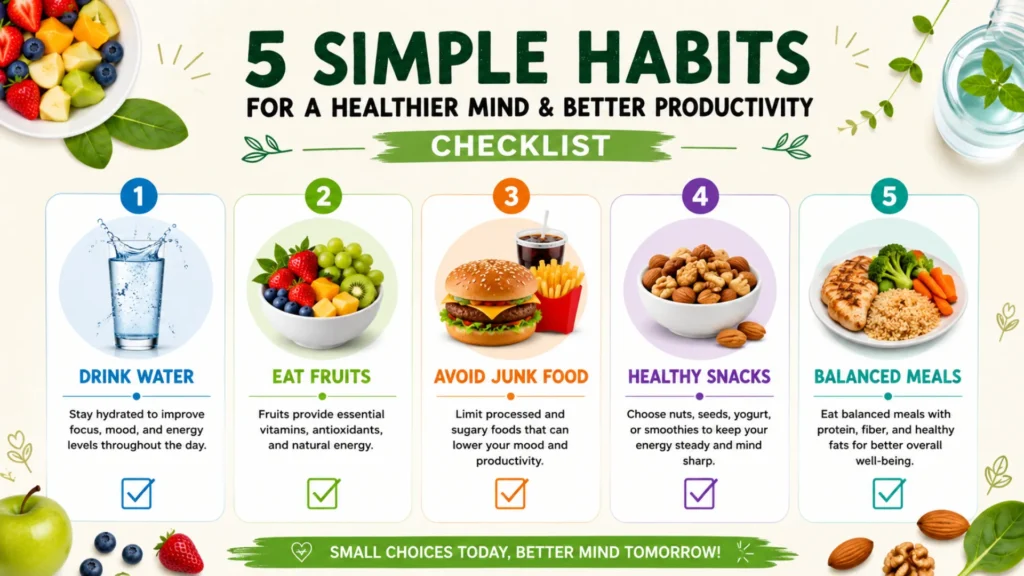
Small eating habits can make a big difference in your mood, focus, and energy levels. One of the best ways to support mental health is to eat balanced meals that include protein, healthy fats, fruits, and whole grains. Staying hydrated is equally important because even mild dehydration can affect concentration and increase fatigue.
Skipping breakfast may lead to low energy and poor focus during the day, so try to start your morning with a healthy meal. It’s also helpful to limit junk food and maintain regular meal timing to keep your blood sugar stable and your mind active.
Quick Action Tips
- Drink enough water daily
- Add fruits to your breakfast
- Replace sugary snacks with nuts
- Reduce processed food intake slowly
Conclusion
Understanding how nutrition affects mental health and daily productivity can help you make smarter food choices every day. Healthy eating not only supports your body but also improves focus, mood, and overall energy levels. The good news is that you don’t need a perfect diet to see results. Even small changes, like drinking more water or eating healthier snacks, can positively impact your daily life. Start with simple habits, stay consistent, and give your mind and body the nutrition they need to perform at their best.