
Have you ever found yourself putting off an important task until the last minute, even though you knew it needed to be done? You’re not alone. Procrastination is something most people experience at some point, whether it’s delaying work projects, studying for exams, or handling everyday responsibilities. While it may seem harmless at first, procrastination can reduce productivity, increase stress levels, and slow down personal and professional growth.
The good news is that procrastination is a habit that can be changed. In this guide, you’ll learn why procrastination happens, how to stop delaying important tasks, and practical strategies that can help you get more done every day. By making a few simple changes, you can improve your focus, manage your time better, and achieve your goals more efficiently.
Table of Contents
What Is Procrastination?
Simple Definition
Procrastination is the habit of delaying or putting off tasks that need to be done, even when you know they are important. Instead of starting the task, you may choose easier or more enjoyable activities, such as scrolling through social media, watching videos, or doing less important work.
It is important to understand that procrastination is different from taking a planned break. A planned break is a conscious decision to rest and recharge before returning to work. Procrastination, on the other hand, is avoiding a task without a clear reason, which often leads to guilt and stress later.
How Procrastination Impacts Your Life
Procrastination can affect both your personal and professional life in several ways:
- Missed deadlines: Delaying important tasks can cause you to fall behind on commitments and responsibilities.
- Increased stress: Last-minute work often creates unnecessary pressure and anxiety.
- Lower productivity: Putting off tasks reduces the amount of meaningful work you complete.
- Reduced confidence: Repeated procrastination can make you doubt your abilities and feel less motivated to take action.
Why Do People Procrastinate?
Procrastination is often more complicated than simply being lazy. In many cases, people delay important tasks because of mental and emotional barriers that make it difficult to get started. Understanding the root cause of procrastination is the first step toward overcoming it and becoming more productive.
Common Causes of Procrastination
| Cause | Impact |
|---|---|
| Fear of Failure | Avoiding important tasks because of fear of making mistakes |
| Perfectionism | Delaying action until conditions feel perfect |
| Lack of Motivation | Difficulty starting or completing tasks |
| Feeling Overwhelmed | Avoiding large projects that seem difficult |
| Distractions | Loss of focus and reduced productivity |
For example, someone who fears failure may keep postponing an important project because they worry about the outcome. Likewise, perfectionists often spend too much time planning and not enough time taking action. Everyday distractions such as social media, emails, and phone notifications can also make it harder to stay focused on meaningful work.
Signs You Might Be Procrastinating
You may be procrastinating if you regularly notice these behaviors:
- Constantly postponing tasks until the last minute
- Waiting for the “perfect time” to get started
- Spending time on less important activities instead of priorities
- Missing deadlines frequently or rushing to complete work
Recognizing these signs early can help you take action and develop better productivity habits before procrastination becomes a long-term problem.
10 Proven Ways to Stop Procrastinating and Get More Done
If you’re wondering how to stop procrastinating and get more done, the good news is that small changes can make a big difference. The key is to build simple habits that help you take action instead of delaying important tasks.
1. Break Large Tasks into Smaller Steps
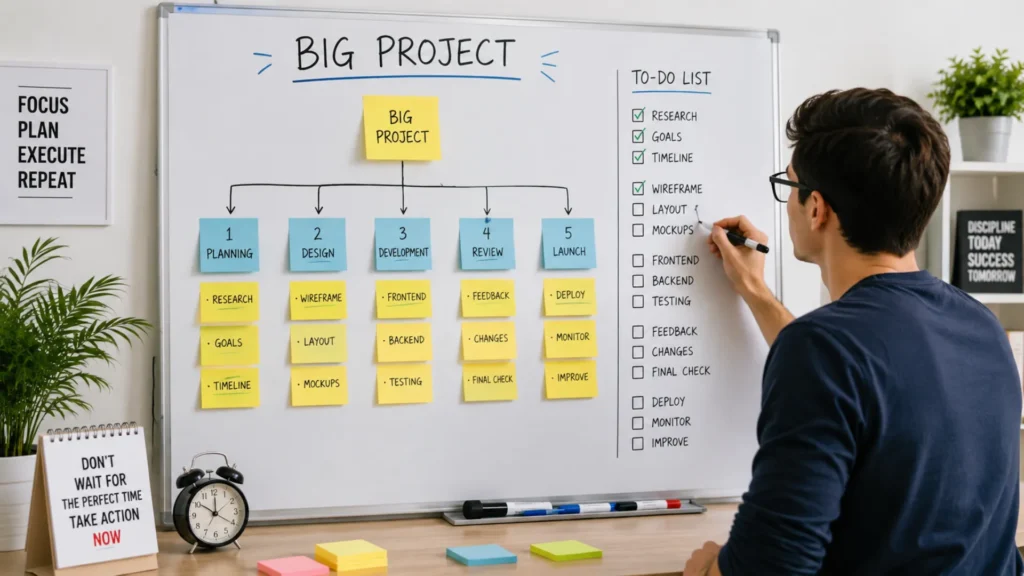
Big projects often feel overwhelming, which makes it easy to put them off. Instead of focusing on the entire task, break it down into smaller, manageable steps. For example, rather than writing an entire report, start by creating an outline. Completing small steps creates quick wins and builds momentum, making it easier to keep going.
2. Use the 2-Minute Rule
The 2-minute rule is simple: if a task takes less than two minutes to complete, do it immediately. Replying to an email, organizing a file, or making a quick phone call can be handled right away. This prevents small tasks from piling up and becoming another source of stress.
3. Prioritize Your Most Important Task
Not all tasks have the same value. Identify the most important task of the day and complete it first. Focusing on high-impact work early helps you make meaningful progress before distractions take over your schedule.
4. Eliminate Common Distractions
Distractions are one of the biggest causes of procrastination. Removing them can significantly improve your focus and productivity.
Common distractions include:
- Social media scrolling
- Phone notifications
- Unnecessary meetings
Consider turning off notifications, using website blockers, or setting dedicated focus periods to stay on track.
5. Try the Pomodoro Technique

The Pomodoro Technique helps you work in focused intervals. Typically, you work for 25 minutes and then take a 5-minute break. These short breaks help refresh your mind and maintain concentration throughout the day. Many people find this method useful for staying productive without feeling mentally exhausted.
6. Set Clear Deadlines
Tasks without deadlines often get postponed indefinitely. Setting clear deadlines creates a sense of urgency and helps you stay accountable. Even if a task doesn’t have an official due date, create one for yourself and stick to it.
7. Stop Chasing Perfection
Perfectionism is a hidden form of procrastination. Waiting for the perfect time, perfect plan, or perfect result often prevents any progress at all. Remember that progress is better than perfection. Taking action and improving along the way is far more effective than waiting endlessly.
8. Use a Daily To-Do List
A daily to-do list helps organize your priorities and keeps you focused on what matters most. Keep your list realistic and limit it to a few important tasks. A clear plan reduces decision fatigue and makes it easier to start working.
9. Reward Yourself for Progress
Small rewards can motivate you to stay consistent. After completing an important task, treat yourself to something enjoyable, such as a short walk, a coffee break, or a favorite snack. Positive reinforcement helps build productive habits over time.
10. Create Accountability
Sharing your goals with a friend, mentor, or team member can increase your commitment. When someone else knows what you’re working toward, you’re more likely to follow through. Regular check-ins can provide motivation, encouragement, and support when needed.
By applying these strategies consistently, you can stop procrastinating, improve your focus, and get more done each day. Start with one or two techniques, build them into your routine, and gradually create habits that support long-term productivity.
Pros and Cons of Popular Productivity Techniques
There is no single productivity method that works for everyone. The best approach is to try different techniques and find the one that fits your work style, schedule, and goals. Understanding the advantages and limitations of each method can help you choose the right strategy to stop procrastinating and get more done.
| Method | Pros | Cons |
|---|---|---|
| Pomodoro Technique | Improves focus and prevents mental fatigue | Interruptions may break your workflow |
| To-Do Lists | Simple, effective, and easy to use | Long lists can feel overwhelming |
| Time Blocking | Helps manage time and priorities better | Requires planning and discipline |
| Accountability Partner | Encourages commitment and consistency | Success depends on regular follow-up |
Each of these techniques can improve productivity when used correctly. If one method does not work for you, don’t give up. Experiment with different approaches and combine strategies if needed. The key is to build a system that helps you stay focused, take action, and make steady progress every day.
Quick Daily Habits to Prevent Procrastination
Simple Habits That Work
Small daily habits can make a big difference when you’re trying to stop procrastinating and get more done. Instead of relying on motivation alone, focus on building simple routines that keep you productive throughout the day.
- Plan tomorrow’s tasks tonight so you can start the day with a clear direction.
- Start with the hardest task first to build momentum and reduce stress later.
- Keep a distraction-free workspace by limiting notifications and removing unnecessary clutter.
- Track daily progress to stay motivated and see how much you’ve accomplished.
- Take regular breaks to refresh your mind and maintain focus without feeling overwhelmed.
These habits are easy to follow and can help you stay consistent, focused, and productive over time.
Frequently Asked Questions (FAQ)
People often procrastinate because of fear of failure, perfectionism, stress, or feeling overwhelmed. Even when a task is important, your brain may choose short-term comfort over long-term rewards, making it harder to get started.
No, procrastination and laziness are different. Laziness involves avoiding effort altogether, while procrastination usually means delaying important tasks despite knowing they need to be completed. Many procrastinators actually want to be productive but struggle to begin.
The fastest way to stop procrastinating is to take one small action immediately. Break the task into smaller steps and use the 2-minute rule. Starting creates momentum, which makes it easier to keep moving forward.
Yes, productivity techniques can be very effective when used consistently. Methods like time blocking, to-do lists, and the Pomodoro Technique help improve focus, reduce distractions, and make it easier to get more done every day.
Conclusion
Procrastination often comes from common challenges such as fear of failure, perfectionism, feeling overwhelmed, lack of motivation, and everyday distractions. While these obstacles can make it difficult to stay productive, they can be overcome with the right approach.
The key is to remember that small actions create momentum. You do not need to make huge changes overnight. Even completing one small task can help you build confidence and move forward.
If you want to learn how to stop procrastinating and get more done, choose just one strategy from this guide and start using it today. Focus on consistent progress, not perfection. Over time, those small daily efforts will turn into better habits, increased productivity, and greater success.